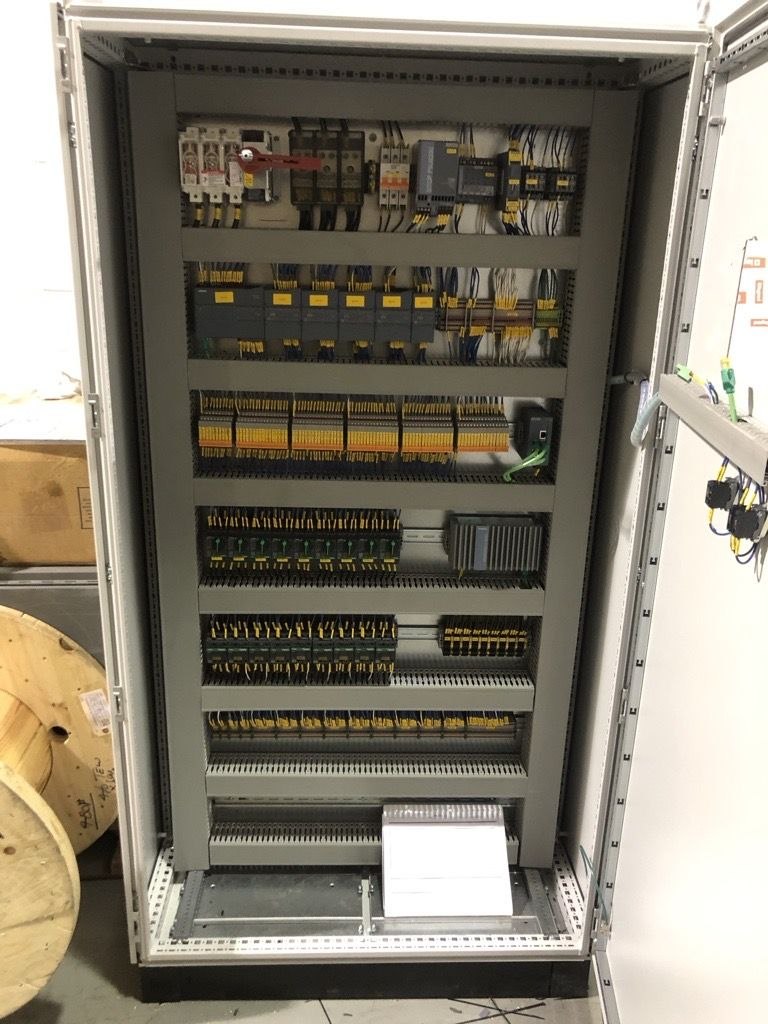
Most electricians learn on homes and small commercial jobs. Provolta came up somewhere different: automotive plant floors, programming PLCs, building control panels, and commissioning robot cells. You can read more about that on the about page.
People sometimes ask why that would matter for a panel upgrade or a set of pot lights. Fair question. Here is the honest answer.
When a production line stops, guessing is not an option
On a plant floor, downtime costs real money by the minute. You cannot swap parts until something works. You have to find the actual fault, understand the system, and fix the cause. That habit does not switch off when the job is a house instead of a factory.
So when your breaker keeps tripping, or half a circuit is dead, we trace it back to the root instead of replacing parts and hoping. It usually means fewer visits and a fix that lasts.
Tidy work is a discipline, not a bonus
Control panels get inspected, labelled and documented, because someone else has to maintain them later. That standard is easy to carry into a home. Neat runs, proper terminations, clear labelling in the panel. It is the difference between work that looks done and work that is done.
We take the jobs others pass on
Because we also do industrial and automation work, the complicated residential and commercial jobs do not scare us off. Three-phase, odd equipment, integrating controls with existing wiring, older systems nobody wants to touch. That is normal for us.
What it means for you
You do not need to care about PLCs to benefit from this. It shows up as:
- Faults diagnosed properly, not guessed at.
- Clean, labelled work in your panel.
- The confidence that the harder jobs are still within scope.
Whether it is a plant floor or your kitchen, it gets done right, to code, and explained to you. If that is the kind of electrician you want, get a free quote and tell us what is going on.